Moosiqs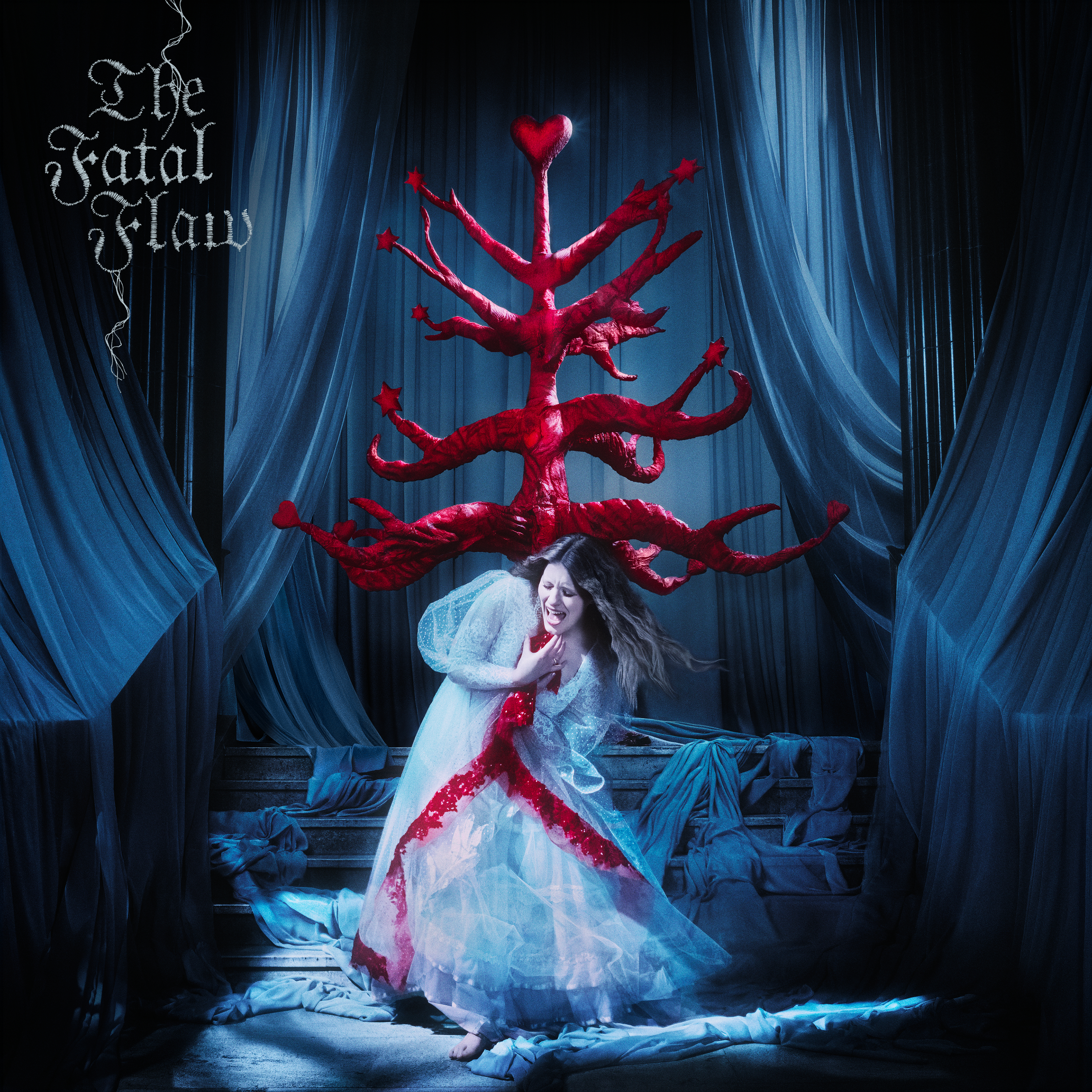
The Fatal Flaw
Paris Paloma
Released: 2026
Paris Paloma had a crystal-clear vision of what she wanted her second album to be. The Brighton-based singer-songwriter’s 2024 debut <i>Cacophony</i> tapped into her life and times around its creation, tales that gave Paloma her breakthrough, but for its follow-up she had an idea for something more conceptual. “I wrote these songs in the knowledge it would be one cohesive album,” she tells Apple Music. Named after a line from Donna Tartt’s 1992 novel <i>The Secret History</i>, <i>The Fatal Flaw</i> is an expansive, bombastic pop album—a dizzying meld of sharp hooks, stirring anthems, whip-smart lyricism and emotive yearning. “I was seduced by the idea that there is such a thing as the fatal flaw,” Paloma says. “One of the main themes in the book is how that which we find beautiful and we love is also what we find terrifying. That’s a major theme on the album that encompasses the art that I talk about and the loving relationships that I write about. It’s the coexistence of turmoil and romance and platonic love and toxic relationships—and then the growth that comes from them.” Sonically, Paloma envisaged something equally grandiose. The record needed to feel like the songs had weight to them and the music is powerful and affecting, taking in indie-pop epics, electronic-tinged reflections, folky sing-alongs and slow-build orchestral balladry. “I couldn’t get this image out of my head of these songs being songs for great halls or being like heavy tapestries and enormous paintings,” she says. “I’d shied away from writing about love so much before because, as a woman, it often feels like it’s trivialised and it’s made cute and dainty and twee and it’s about crushes or whatever. The songs had to sound sweeping and heavy.” Strap in as Paris Paloma guides us through <i>The Fatal Flaw</i>, track by track. <b>“Miyazaki”</b> “This is different to the rest of the songs and that’s why it is where it is. I intend ‘Miyazaki’ to be the prologue, the introduction to the rest of the album. It’s a song about art and about AI and everything that I fear we stand to lose from AI art. I named it after Miyazaki [manga artist and Studio Ghibli co-founder Hayao Miyazaki] because his artwork is so important to cultural conversations. He is so vehemently against AI and he called AI an insult to life itself. I was thinking about why I make art, why it’s so important, why it has dominated my life, my time and my emotions so much. My examination of that is wrapped up in this song.” <b>“Rothko”</b> “‘Rothko’ kicks off most of the main themes on the album. I wrote it about a time when I was 17 and studying history of art. I had fallen in love with Mark Rothko paintings and the story that people stand in front of these big, heavy paintings and it makes them cry. I went and I saw one for the first time and I didn’t cry. I felt like there was something wrong with me, that I couldn’t appreciate art in the way that I’d really mythologised. Many years later, I broke up with someone and the same feeling came back, where I was just standing in front of something trying to make myself feel something I didn’t. I came to understand that both of those situations were in the wrong context. It wasn’t the right painting, it wasn’t the right place that it was exhibited, and it wasn’t the right person, it wasn’t the right time.” <b>“Stem the Flow”</b> “This is one of the most vulnerable songs on the album. It’s about lack of emotional resolution, about not being able to fully forgive someone and also not being able to fully condemn them, so it feels like you’ve left a door open and they could walk through it, but they don’t. Or it’s love that just feels like bleeding and it can’t heal because the knife is still in your side. For whatever reason, whether it’s the way that your life is or your own emotional growth, you can’t take the knife out. It was one of the most cathartic songs to write on the album.” <b>“Bleeding Part of Me”</b> “‘Bleeding Part of Me’ continues this theme of dysfunctional love. It’s a really confessional song about this complex and fantasy that I had for a really long time to be saved in a relationship, to be picked up as though I weighed nothing and someone else could take all my problems and would see how wounded I was and fuss over me. I could just drop and be a total dead weight and not even be an active participant in my own life, but just sleep in the knowledge that someone else loved me and was taking care of everything. I say it’s confessional because I’m allowing all of that dysfunction to show and I didn’t particularly resolve it, even though I’m in a much healthier place now. But it was a very ugly truth of how I craved love really badly for a long time.” <b>“get her the fucking flowers”</b> “‘get her the fucking flowers’ is like [2023 single] ‘labour’’s sad little sister. It’s about a relationship where someone is making do with the barest minimum. One of the ways that manifests in my mind is flowers, because you can pick flowers from a pavement, you can buy them for £2 at a supermarket. Well, maybe five. I remember being given flowers once after wanting them for ages from a partner, and it felt as though I’d hunted an animal. It felt as though I was carrying a carcass home, and I was going to have to use every part of it to keep me going for as long as possible. I took photos of it and I pressed the stems and I pressed the petals and I dried the stems. If ‘labour’ is about all the things that women are expected and made to do, and the absolute overwhelm of their jobs, ‘get her the fucking flowers’ is about how little some women have to make do with in relationships.” <b>“Pre - Raphaelite”</b> “It’s a song that speaks about platonic love, about female friendship and love and infatuation and self-love to an extent, because there’s this element of jealousy and self-comparison. I wrote this song inspired by women around me that I was watching and looking at and feeling really mesmerised by because I think so many people I know have these seemingly intrinsic qualities of their mannerisms. It’s definitely one of the most frivolous and girly and fun songs on the album and I wanted it to sound so decadent and feminine and historical, so we’ve got baroque strings and romantic strings and we’ve got a harpsichord in there to hark to different eras of very decorated and ornamented femininity.” <b>“Good Girl”</b> “It’s about your feeling of self-worth attached to your body. Wrapped up in that is a lot of my feelings about choice, feminism and the choices that women make about their own bodies in order to feel at peace with them. We’re in a time where women are being told and encouraged to shrink across the board and, to an unhealthy extent, change their body and change their appearance and commit this kind of violence against themselves. I wrote it as a stream of consciousness imploring women to allow themselves to rest and allow myself to as well, because I’m absolutely not exempt from struggling with that. I wrote it with [co-producer] Chloe Kraemer and we made it a dance track because I wanted to evoke that feeling of just experiencing being in your body as opposed to looking at it all the time. One of the times that you do that most strongly is dancing and moving your body. That’s such an act of joyous resistance.” <b>“Pyrrhus (you go where I cannot)”</b> “‘Pyrrhus’ is a song about the son of Achilles, who was this teenage boy and his father had died in the war on Troy. He is written in some retellings of the <i>Iliad</i> as this kind of bloodthirsty teenager who, to me, reads totally like a young incel seduced by the manosphere. I wrote it from the perspective of his mother, and I very much felt like I was writing a song about the kind of young boys who I read comments from or who are represented in [TV drama] <i>Adolescence</i>. It’s that feeling of being a girl or a woman and watching a once-sweet and kind and empathetic boy that you knew be radicalised by the promises of toxic masculinity and war and violence—and [they] commit that violence on themselves too, to the point where you don’t recognise him or he doesn’t recognise himself.” <b>“Silhouette on the Hill”</b> “This continues a narrative from songs like ‘Stem the Flow’, where it’s left very messy and unresolved because it’s about very messy feelings. It’s about having been through whatever toxicity looks like in a relationship and how sometimes the only weapon in your arsenal is to just disappear. The most empowering thing a lot of women are able to do realistically is to not permit that person to have access to them and to keep themselves as far away as possible. I’m in a job where I feel very witnessed, and I was imagining old stories of persistent hunters in caveman times who, no matter how much animals would run from Homo sapiens, they turn around and see a silhouette on the hill. Sometimes that’s what I feel like when it comes to people who would otherwise demand access to me and I don’t give it.” <b>“Good Boy”</b> “‘Good Boy’ and ‘Good Girl’ are sister songs and they’re both about the ways in which the genders of men and women self-police patriarchy on themselves. I wrote it imploring men—the kind of men who would criticise songs like ‘labour’ or would look at feminism and call it man-hating—to see that you have so much more in common with the average feminist woman than you do with any manosphere character, than you do with any toxic male who would try and get you to commit violence against yourself and other people. I was really inspired by the writings of bell hooks, she writes so uncompromisingly about patriarchy, but she writes about men with so much love. With this song I was thinking, ‘What’s the productive conversation that we can have here after I’d written “labour”, after I’d written my first album?’.” <b>“Beautiful Birds”</b> “‘Pyrrhus’, ‘Good Boy’ and ‘Beautiful Birds’ really engage with the concept of masculinity, examining what it is to be a woman who loves men whilst under patriarchy. On this one, I am remarking on the men who I love in my life and the men that I have loving relationships with, romantic or platonic. I’m remarking how different and how much happier they are than the men who would deny feminism, would not want to be allies and would say disparaging things or shout down women on the internet or in real life. I always hear the manosphere invoking the animal kingdom in order to justify their sexism but I never see any men invoking the little birds of paradise who do dances for their girlfriends and mate for life and are really happy. That’s why I compare my male loved ones to beautiful birds. It’s both a love song about my love life, but it’s also about the male loneliness epidemic.” <b>“I Cry in Front of Paintings”</b> “This is a love song. It resolves those feelings of anxiety from ‘Rothko’ and it talks about the way in which you have to accept the love that you deserve. It speaks to the safety and the gentleness and the love that you are able to find after all the soul searching, all the growth and the journey of everything painful that’s gone before. It makes allusions to fate and falling in love as though you have no choice in it, but it’s really a song about accepting good love that you deserve and finding it when you’re ready to accept something that will nourish you, expand you, challenge you and grow you and somebody else as a person.”