Moosiqs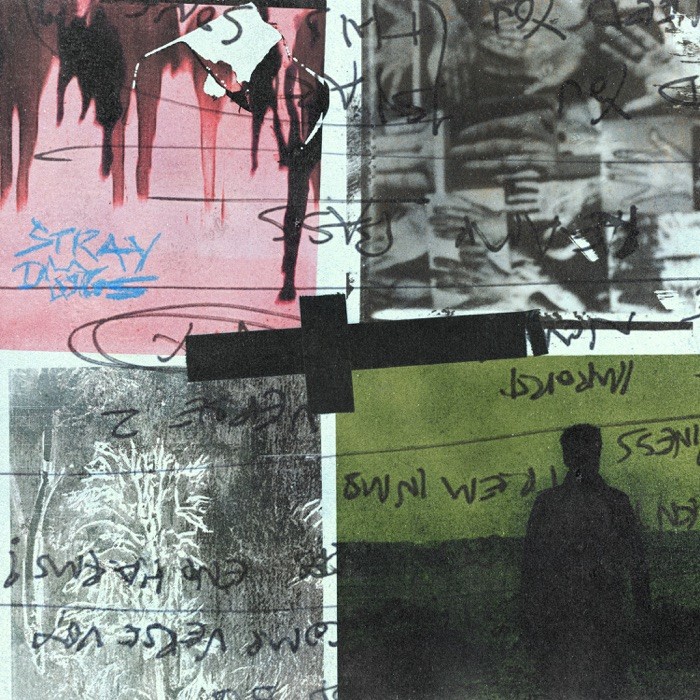
Stray Dogs
Nothing But Thieves
Released: 2026
Since emerging in the mid-2010s, rock explorers <b>Nothing But Thieves</b> have had a healthy appetite for adventure. Each album has been a reaction to, not a retread of, the last, with the Essex five-piece consistently pursuing new ideas and instincts. So after 2023’s <i>Dead Club City</i>, a concept album about a city-sized private members’ club, the question was: Where will their imaginations drag them next? On this follow-up, their fifth album, the answer is actually a little closer to home—away from dystopian watering holes and back to earthly stages. “The philosophy was to feel a bit raw, a bit more chaotic and really try to capture how we sound live,” guitarist Joe Langridge-Brown tells Apple Music. “I don’t think we’ve ever done that. So that was a different challenge.” If that meant leaning more on a fundamental guitar-bass-drums setup after the futuristic synth crusades of <i>Dead Club City</i>, this is still an album that stretches and reshapes NBT. It may reference the music that inspired them growing up in the ’90s but they were adamant that it should sound like it belongs to 2026. On a record deliberately structured like a set list, where accidents and mistakes are embraced and crowd noise and jams birthed on the road become part of the music, they also manage to create a cohesive song by cross-pollinating garage rock, soul, blues and dream pop (<b>“Baby Kool (Evelyn)”</b>) and craft a track with the personality of “a depressed Buddy Holly” (<b>“Death in the Backseat”</b>). “It’s still a lot of experimentation,” says singer/guitarist Conor Mason. “There’s a lot of throwing paint on the wall and seeing what sticks.” Read on as Mason, Langridge-Brown and guitarist/keyboardist/producer Dominic Craik talk us through <i>Stray Dogs</i>, track by track. <b>“Stray Dogs”</b> Joe Langridge-Brown: “On this song, and a couple of others, there’s a lot of reference to our lives and place names and travel and our fans and our crew and our people. The last two albums, <i>Moral Panic</i> and <i>Dead Club City</i>, were very outward looking. So this one was meant to be much more about our world. We found it interesting how a lot of our fans have found each other and grown up together. It mirrors the band, in a way. A lot of times on this record, we’re actually breaking the fourth wall. A lot of my favourite artists do it…Alex Turner, Nick Cave…Bowie used to do it. Some people can take you out the world, but if you do it right, it can bring you closer to what’s actually being spoken about.” <b>“Testosterone”</b> Dominic Craik: “It felt like there were no boundaries to how we were writing. The riff kind of fell out and had this dreariness and drunkness to it that married quite nicely with some of the lyrics. Conor’s voice is used in a new way as well, which excited us because it’s such a gift. He can do so many different types of vocals that it’s, ‘Which one do you pick?’ like a kid in a candy store. We’re always trying to find the best character for the tune.” <b>“Evolution”</b> JL-B: “[It only] took about a day [to write]. Apart from the middle eight, and that wasn’t because it took us ages, we just couldn’t be arsed.” DC: “It did change a little bit going into the studio again. We didn’t want it to sound too similar to what we’ve done. You obviously want to put a new spin on it. So it was working out how to walk that tightrope without going too far and you’re like, ‘Hold on, it’s just lost the essence of what it once was.’” <b>“Death in the Backseat”</b> Conor Mason: “It almost felt like a character, this one. It’s got this 1950s doo-wop feel to it, like a depressed Buddy Holly.” JL-B: “We’d figured out what the record sounded like, and maybe what the singles were going to be, and we were chasing something that shook it up and felt out of our world a little. Conor’s delivery is a huge part of the arrangement.” DC: “It has a California cruising, surfer-y rock thing, which we hadn’t really experimented with before. As it was quite late in the recording process, it meant that we could keep it tempered. Sometimes, when you’re writing songs, you’re like, ‘Right, it needs to get bigger because that’s more exciting.’ Whereas, here, we were like, ‘This one can cruise.’” <b>“#5”</b> JL-B: “You have to put it as track number five on the record, otherwise we’ll be getting letters every day. But it’s actually a reference to this being the fifth album and feeling like, ‘I can’t believe that I’ve realised this about myself, or about us, after five albums and 14 years or whatever it’s been.’ Even something that’s completely mundane. Self-discovery is something a lot of people can relate to, especially when it’s something obvious. I think that happens quite a lot as you get older.” <b>“If You Don’t Have Someone to Love”</b> DC: “It’s not your standard verse, pre-chorus, chorus. It’s got a pretty interesting flow to it. We wanted to use different textural elements at this point. It can be an intense listen and you do want to offer respite. After a while of just writing songs with guitars, bass and drums, you’re looking for that extra dimension to pull in. Introducing the strings added a whole new element. It’s also got a cool outro. We were looking at different ways to end the songs that weren’t like feedback or a manipulated crowd noise or a hard cut. The song feels like a bit of a journey, and rather than the car coming to a hard stop, it slows you down gradually.” JL-B: “It’s a nice way to end side one of the vinyl. I think we’re talking about things that are tactile and [of a] non-digital world in a lot these songs, and that was a nice consideration.” <b>“(Archive 76)”</b> DC: “We spent a whole morning cutting up moments from live sets of our crowd, talking amongst themselves, cheering, Conor saying stuff. And then we plumbed it my modular gear, messing with it for hours. You sometimes only get about 10 seconds of usable stuff, a couple of bits that are like, ‘Actually, there’s something really nice about that.’” JL-B: “I don’t actually know what show we ended up using [for this], but across the record there’s a few different shows. Are you saying, ‘This one’s a karaoke number’?” CM: “Yeah, I was taking the piss out of [September 2020 single] ‘Impossible’. It was in Stockholm. I remember saying it at that gig and laughing to myself because I’m not that funny normally.” <b>“Baby Kool (Evelyn)”</b> CM: “There’s a real release of freedom. It’s back to four chords and noise and as distorted as you can get.” JL-B: “I was listening to a lot of Cocteau Twins but it’s quite a soul melody, under this garage rock, Sonic Youth kind of thing. That mesh of worlds. A lot of the time, that’s where the magic is.” DC: “Obviously, Cocteau Twins had this dreamlike nature to them. It was such a great place to go to temporarily to then pull the rug out from underneath your feet and get into this very driven, very focused, slightly gnarly instrumental that follows the chorus.” CM: “This is where we’re at our strongest, when we somehow manage to fumble together three different genres in one song. Most people would call it a headache but we call it a semi smash hit.” <b>“AI.Jesus”</b> JL-B: “These songs where it’s a bit tongue-in-cheek or snide are the most fun to write. But this had 19 demo versions I think. It had three completely different choruses, and the chorus that survived was rewritten 10 times. You know something is good and you can’t leave it because you’re so close, but you’re not quite nailing it.” DC: “Every time we stepped into the writing room together, it was like someone telling you that you’ve got to change the oil in the car—something you don’t really want to do, but you know it’s got to be done. When you get to the studio to record it, you forget a lot of that. But it’s marginally traumatic talking about it now.” CM: “If you’re not careful, you can make melodies and decisions that turn it into a genre it doesn’t want to be. That’s why it took so many different versions and delicate scissoring throughout, so it still felt quirky but rocky.” JL-B: “On songs like this and ‘Testosterone’ and ‘American Confidence’, having a character or saying something that isn’t your usual thing makes a huge difference. [Otherwise] it can easily turn into something that is a bit clichéd or too macho.” <b>“I Needed You Then, I Need You Now”</b> CM: “I wanted to have something quite flowy and heartfelt and ’90s. It’s listening to Alanis Morissette, Cocteau Twins, that sort of thing. The first version was completely different. It had some merit, but it didn’t feel like it stood up as a track. Joe was like, ‘We’ve got a lot of things going on in this record. There’s a lot of noise, there’s a lot of big space, but there’s no candle-lit small space.’ So we stripped everything off it so it could focus on the lyric, the melody and my voice. The manipulation of my vocals makes it so much more interesting. There’s something about the fact that I almost can’t recognise my voice until halfway through. Then the lyric opens up, the clarity opens up, and you really feel it.” <b>“American Confidence”</b> JL-B: “If you got the intro of that song wrong—or right to some people—it would sound like Limp Bizkit. It’s kind of bro-y, American sounding, which is the point of the song. But it’s also got this Jeff Buckley-like delicateness to the vocals. It was an excuse to get out my notepad and see some of these characters that I’ve written about over the years. The first verse is about this music executive. It reminded me of the Pink Floyd ‘Have a Cigar’ guy, that’s why there’s a reference to that. The second verse is more like a televangelist I saw an interview with. He’d got a private plane and wouldn’t fly with what he called the ‘demons’ on a commercial flight. It’s about the over-commercialisation of everything that America sums up. Fun to write, but it’s going to be interesting playing this song in America.” <b>“A Different Kind of Happiness”</b> CM: “It’s one of the strongest things we’ve ever written. Which is nice to say after five records. You’re like, ‘It’s a great song, should we have it earlier in the album?’ But because we were trying to make this track list like a set, it made so much sense. It’s like how we would end a live set. It gave it its own moment putting it right at the end.” JL-B: “I like that we ended with this still. You get quite a lot of advice from non-musicians in our line of work, like, ‘Oh, you can’t do that, it might not stream as well…’ but we’re still creating our art at the end of the day, and some things are just more important than that.”