Oasis's Triumphant Return in 2025
Oasis’s 2025 comeback reignited British music, boosted Manchester’s economy, and redefined live music’s cultural impact.
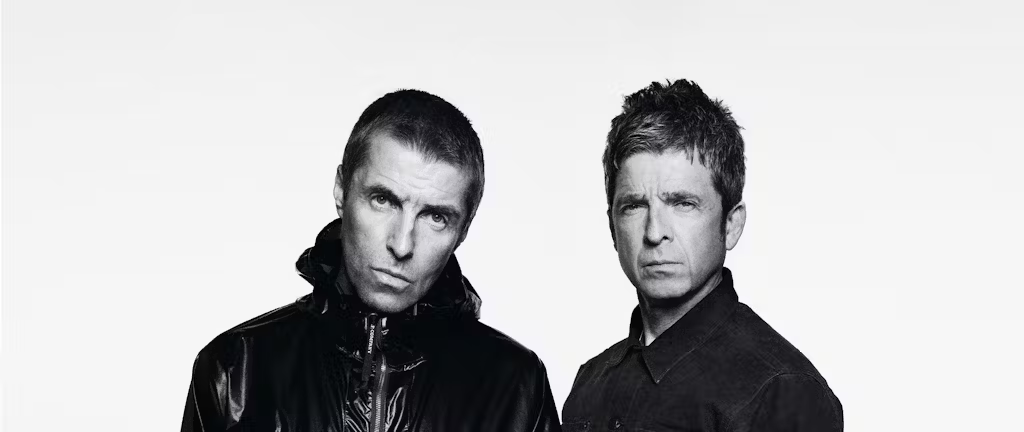
Introduction
When Oasis returned in 2025, it wasn’t mere nostalgia—it was a resounding reconnection. From swells of anticipation to waves of economic activity, their Live ’25 tour sounded like Britain rediscovering its anthem.
The Revival That Changed Everything
Heaton Park didn’t just host gigs—it witnessed a cultural rebirth. For a few nights in July, generations united: millennials belting out “Supersonic,” Gen Z discovering “Live Forever,” and older fans feeling the rush of youth all over again. The Gallagher brothers—whose relationship has been as volatile as their riffs—offered a rare moment of reconciliation mid-show, reminding everyone that rock isn’t just sound; it’s emotion in motion.
From Manchester to the World
What followed was a coast-to-coast takeover: sold-out nights in London, Scotland, and beyond, culminating in stadiums across the Atlantic being shaken awake. Stateside fans roared as Oasis delivered anthems that, while decades old, felt born anew. Their return reframed them—not as a retro relic, but as still-urgent titans of live performance.
Why It Resonated So Deeply
In a culture where auto-tuned perfection often reigns, Oasis’s grit stood out. Their sound—unpolished yet powerful—felt vital, even in 2025. The thrill came from hearing guitars crackle like streetlamps, voices strain like they meant every word. Their return reminded audiences that genuine intensity still sells—and still heals.
Manchester’s Moment in the Sun
Manchester’s economy didn’t just benefit—it boomed. Streets overflowed. Hotel prices climbed by nearly 400 %. Pubs, restaurants, taxis, takeaways—every corner felt the surge. But the heart of the story is how Oasis turned profit into promise, funneling proceeds into grassroots music venues. It wasn’t just a homecoming; it was an investment in the city’s next generation.
Live Music as +£1 Billion Powerhouse
Analysts estimate Live ’25 boosted the UK economy by close to £1 billion. That’s tickets, transport, merch, travel, food—all flowing from the chords of the ‘90s. In one summer, Oasis became a one-band economic recovery plan, proving once and for all that live music has far-reaching impact.
Cultural Currency Reloaded
Their return was more than a nostalgic jolt; it was a cultural reaffirmation. British rock can still move hearts and markets. And from revived local scenes to renewed confidence in UK music’s export power, Oasis’s comeback feels less like deja vu and more like destiny.
Conclusion
When Oasis came back, they didn’t just revisit old anthems—they ignited new ones. They brought economic lift, cultural buzz, and emotional payoff in equal measure. And as the final chords faded, you realised—this wasn’t just a concert tour. It was proof that, sometimes, legends don’t return. They re-enter.